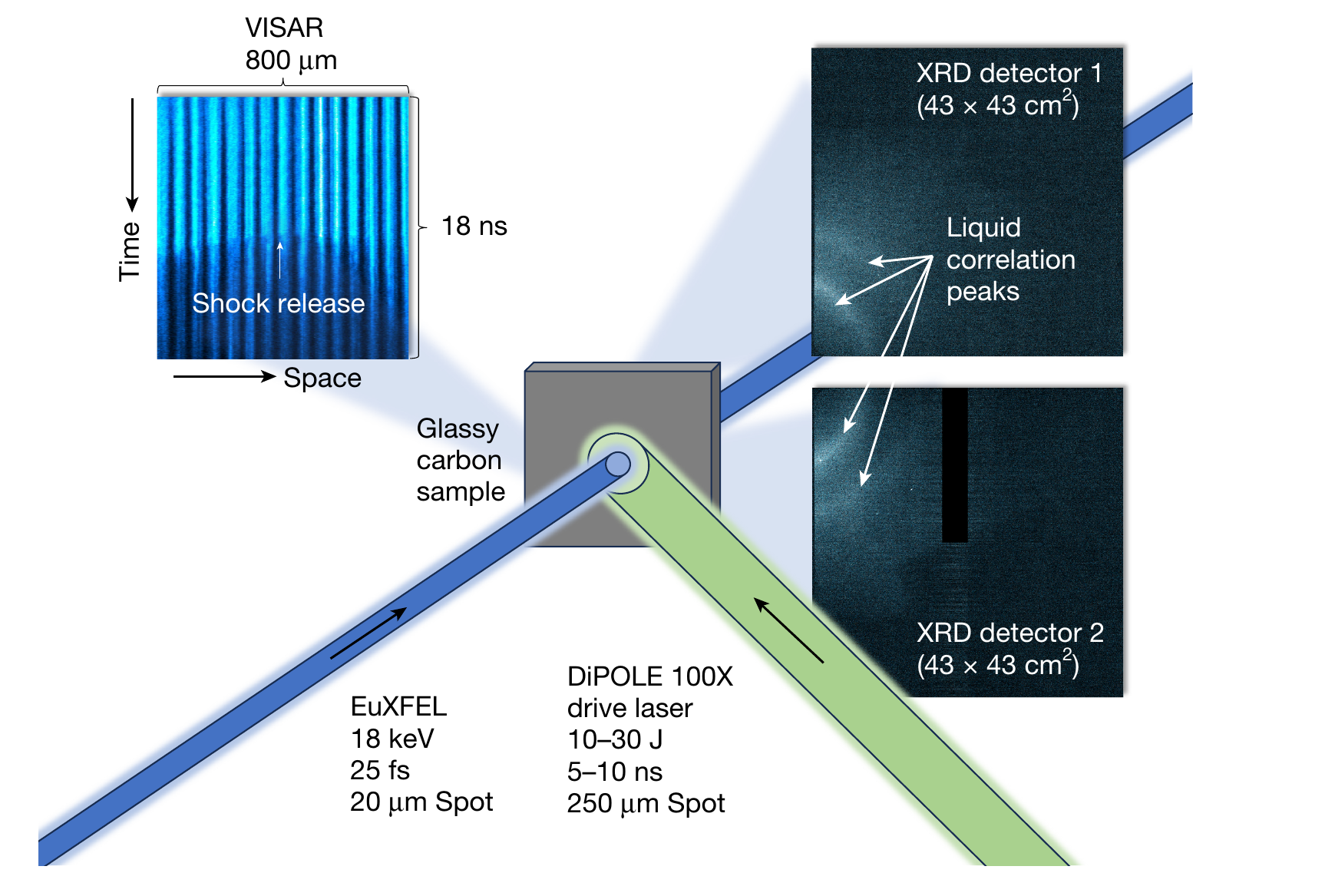
LMCE was part of an international collaboration led at European XFEL. Using the DIPOLE100-X laser, they succeeded in studying carbon in its liquid state. This major scientific achievement was published in the journal Nature.
The LMCE is a research laboratory affiliated to the University of Paris-Saclay that covers a wide range of materials science areas, going from the ab-initio scale up to the macroscopic scale, joining together experiments and numerical simulations.
LMCE was part of an international collaboration led at European XFEL. Using the DIPOLE100-X laser, they succeeded in studying carbon in its liquid state. This major scientific achievement was published in the journal Nature.
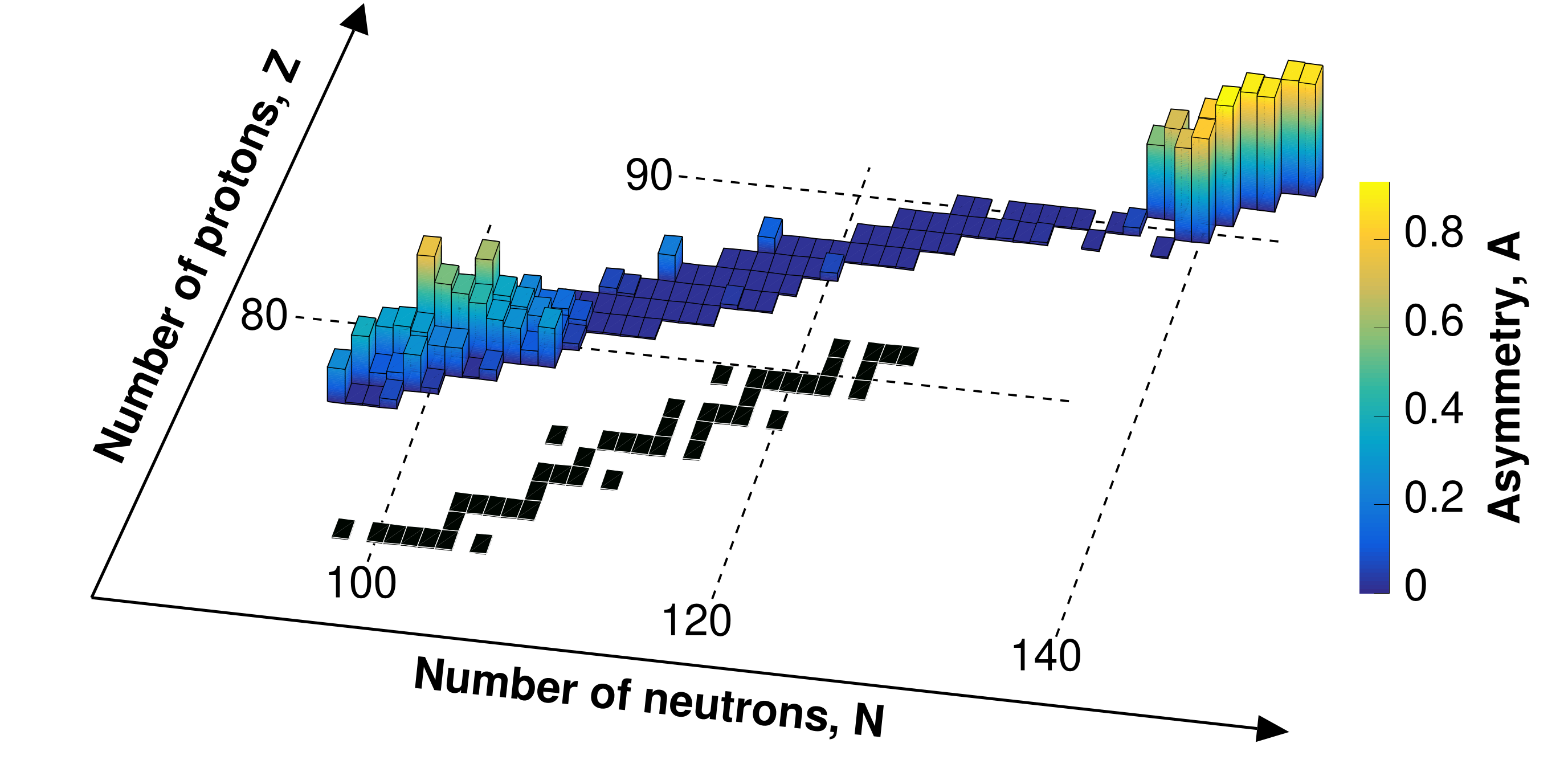
A pioneering measurement campaign has enabled the systematic mapping of the asymmetry between fragments produced in nuclear fission. Two “islands” of predominantly asymmetric fission have been identified as a function of the parent nucleus. The one in the lower-left corresponds to recently discovered asymmetric fissions in the mercury region (Z = 80). Our study shows that this type of fission is favored by the presence of a light krypton fragment (Z = 36). These results were published in Nature.
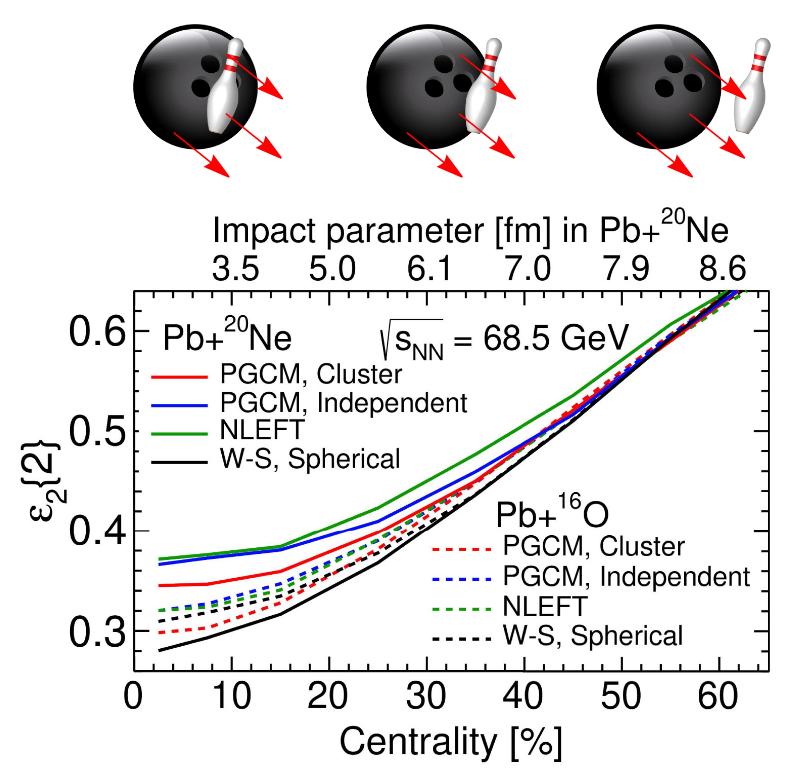
The SMOG2 system of the LHCb detector enables the study of fixed-target ion–ion collisions at relativistic energies (~100 GeV). 3+1D hydrodynamic simulations, based on ab initio calculations of the ¹⁶O and ²⁰Ne nuclear structures, predict that the deformed shape of ²⁰Ne strongly enhances the elliptic flow (v₂) in Pb+Ne collisions compared to Pb+O. This sensitivity to nuclear geometry demonstrates that SMOG2 is a unique tool to probe nuclear shapes experimentally and to study quark–gluon plasma formation in a novel collision regime. The paper related to this work is available here: G. Giacalone et al., Phys. Rev. Lett. 134 (2025)