LMCE was part of an international collaboration led at European XFEL. Using the DIPOLE100-X laser, they succeeded in studying carbon in its liquid state. This major scientific achievement was published in the journal Nature.
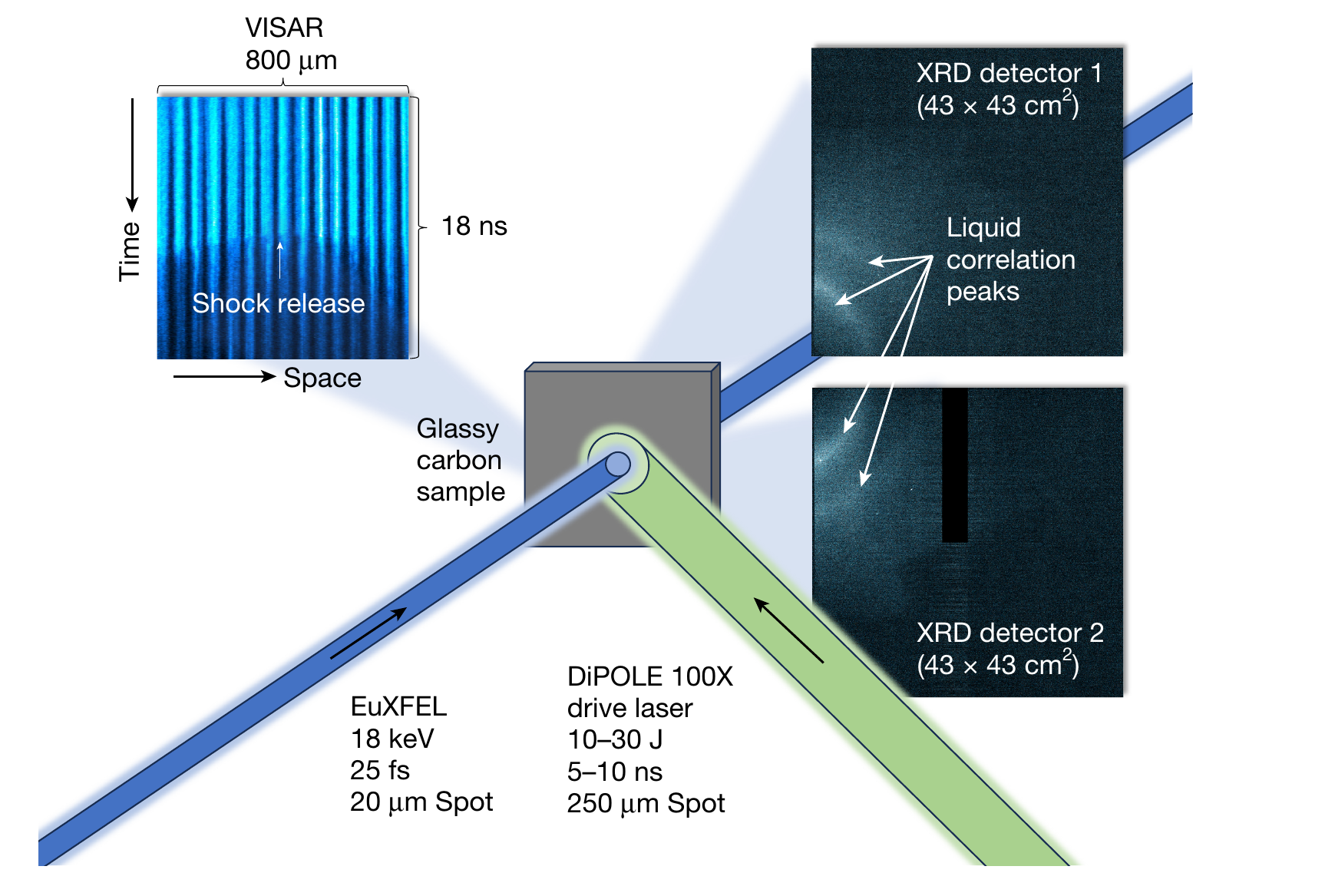
LMCE was part of an international collaboration led at European XFEL. Using the DIPOLE100-X laser, they succeeded in studying carbon in its liquid state. This major scientific achievement was published in the journal Nature.
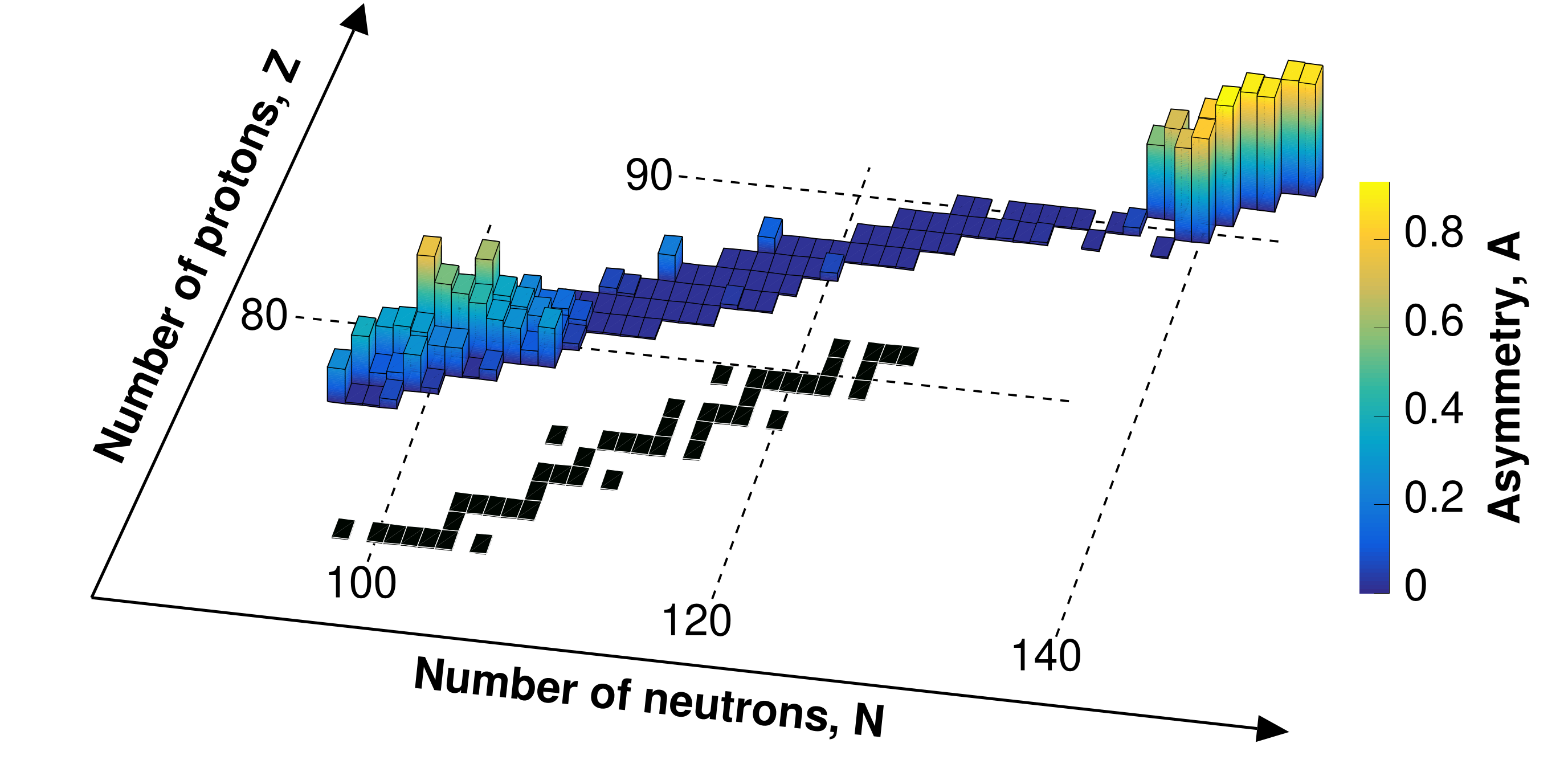
A pioneering measurement campaign has enabled the systematic mapping of the asymmetry between fragments produced in nuclear fission. Two “islands” of predominantly asymmetric fission have been identified as a function of the parent nucleus. The one in the lower-left corresponds to recently discovered asymmetric fissions in the mercury region (Z = 80). Our study shows that this type of fission is favored by the presence of a light krypton fragment (Z = 36). These results were published in Nature.
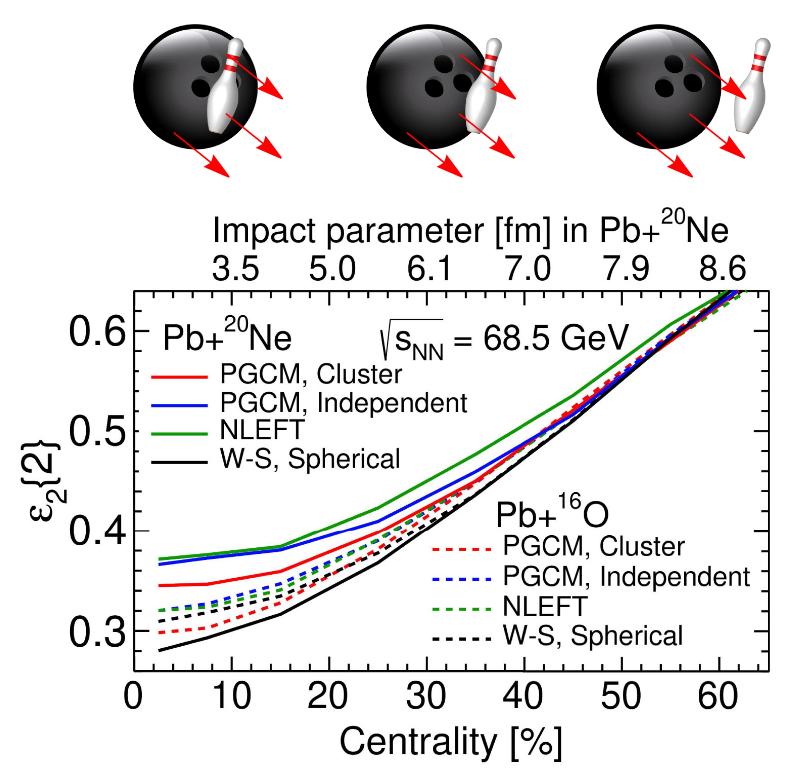
The SMOG2 system of the LHCb detector enables the study of fixed-target ion–ion collisions at relativistic energies (~100 GeV). 3+1D hydrodynamic simulations, based on ab initio calculations of the ¹⁶O and ²⁰Ne nuclear structures, predict that the deformed shape of ²⁰Ne strongly enhances the elliptic flow (v₂) in Pb+Ne collisions compared to Pb+O. This sensitivity to nuclear geometry demonstrates that SMOG2 is a unique tool to probe nuclear shapes experimentally and to study quark–gluon plasma formation in a novel collision regime. The paper related to this work is available here: G. Giacalone et al., Phys. Rev. Lett. 134 (2025)
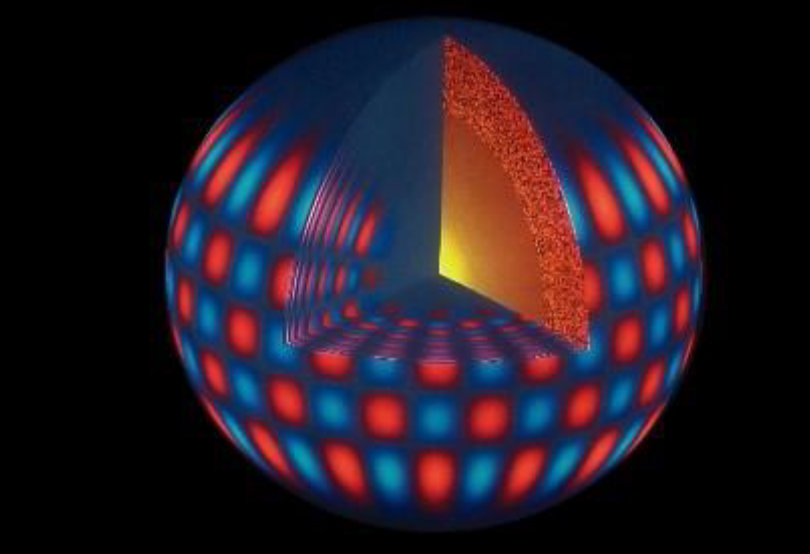
A team from LMCE co-authored an important publication in the journal Nature Communications on solar modeling. The study makes an original connection between helioseismology and the opacities of the sun’s elements.
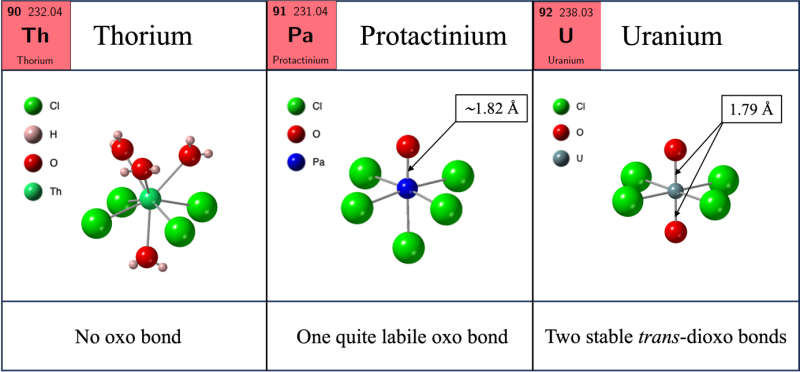
The recent advances concerning the complex chemistry of the protactinium ion presented in the paper T. Shaaban et al. Chem. Comm. (2024) have recently been featured in the news of the chemistry section of the CNRS. The associated article can be viewed by following this link.
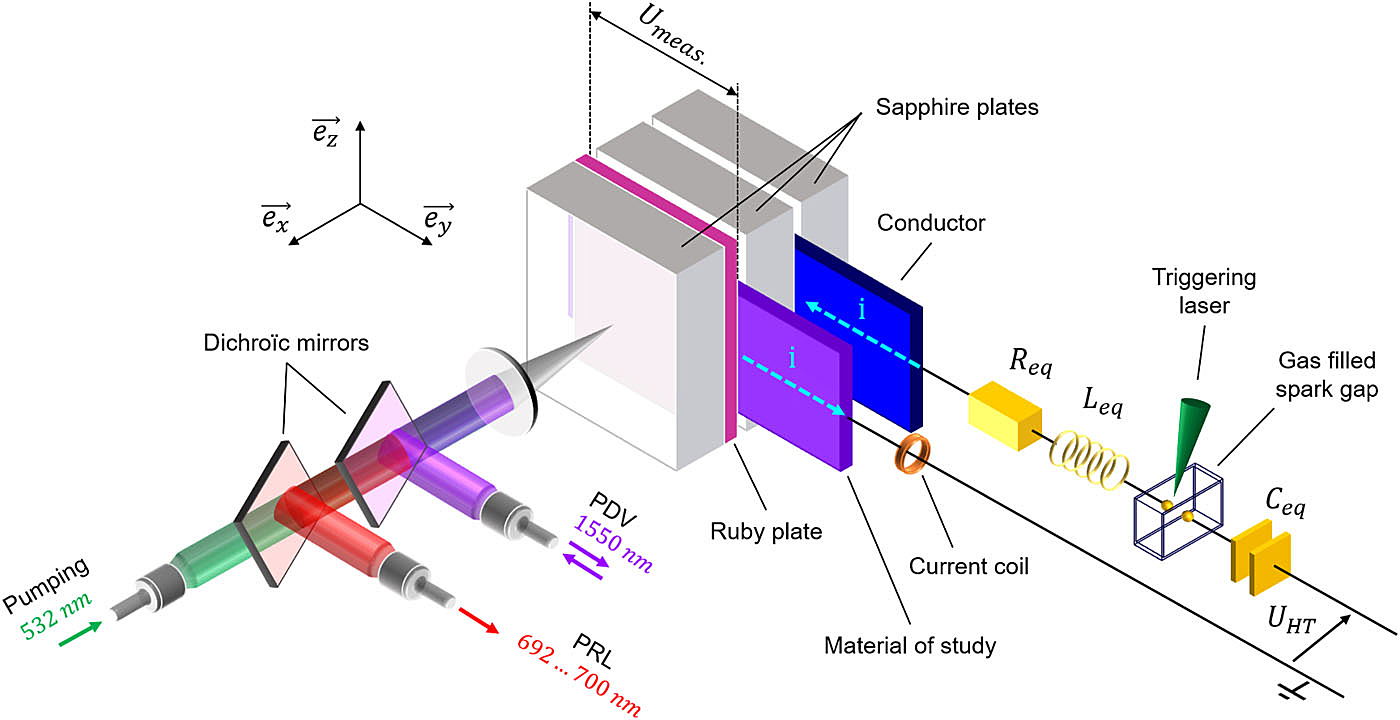
The paper presenting the development of the pulsed power facility (EPP) B. Jodar et al. Rev. Sci. Instrum. 95, 103526 (2024) has recently been selected has a scientific highlight of the American Institue of Physics (AIP). The associated article can be read via this link.